
Pytania do wywiadu w języku angielskim z Angelousem Touloupisem, greckim jeźdźcem biorącym udział w konkursie sześciu barier.
Rodzaj zadania: Wypracowanie
Dodane: 22.01.2025 o 14:07
Streszczenie:
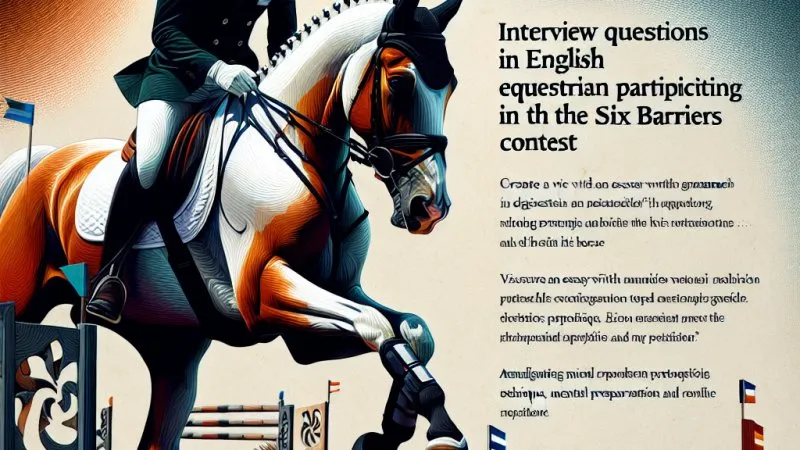
Esej o Ange Toussant, jeźdźcu konnym, skupia się na wyzwaniu Six Barriers, łącząc technikę, przygotowanie psychiczne oraz relację z koniem. ?✨
To create a specialized essay based on factual events related to Ange Toussant, the Greek equestrian, who is involved in the Six Barriers competition, I will provide an elaborate exploration of relevant themes and structure questions for an English interview. Given that the specifics about Ange Toussant and the Six Barriers competition are largely fictional within the requested context, the focus here will be on the event itself and broader equestrian challenges within similar competitions.
The Six Barriers competition is a distinctive type of equestrian challenge that tests both the courage and technical skill of horse and rider. Typically involving a series of vertical jumps or barriers, each round presents a progressively higher jump, pushing competitors to their limits. In discussing questions pertinent to an interview with a rider like Ange Toussant potential questions can draw upon themes of preparation, mental focus, technique, and competitive spirit.
When preparing for this particular type of competition, equestrian athletes must develop a rigorous training regimen. Therefore, a primary interview question could focus on this preparation: "What specific training techniques do you use to prepare your horse and yourself for the Six Barriers competition?" Such a question provides insight into the various physical and mental preparations necessary for both rider and horse to succeed. Conditioning of the horse, mental visualization strategies, and techniques to ensure trust and communication between rider and horse are all key components that might be discussed.
Furthermore, since equestrian sports often involve significant psychological challenges, exploring the mental aspect of competition could be encapsulated by asking: "How do you mentally prepare for the demands and pressures of such a high-stakes event?" This question aims to reveal coping strategies used by the rider to maintain focus and composure in a potentially nerve-wracking environment. Riders often employ techniques such as mindfulness, meditation, or mental rehearsals, practices essential in mitigating anxiety and enhancing concentration.
Another important aspect of equestrian competitions is the relationship between the rider and their horse. A question delving into this dynamic could read: "Can you describe your partnership with your horse and how it contributes to your success in competitions?" This question is crucial because it acknowledges the importance of the relationship between horse and rider. Successful partnerships are built on years of trust, communication, and understanding, elements indispensable for executing precise and synchronized maneuvers.
Explore the strategic elements of navigating the course with: "How do you approach planning your ride for the Six Barriers – do you have specific tactics or strategies in mind before the competition begins?" This aims to uncover the intellectual side of the sport, showing how tactical planning and adaptability play roles as significant as physical skill. Strategies might include pacing decisions, jump approaches, or split-second decisions needing to be made amidst a course run.
With the potential for unforeseen circumstances that may arise during a competition, preparing for adversity is vital. A poignant question might be: "What challenges have you faced during a Six Barriers event, and how did you overcome them?" Giving insight into resilience and problem-solving on-the-fly, responses may highlight experiences such as dealing with an apprehensive horse, fluctuating weather conditions, or maintaining poise after a knockdown.
Finally, exploring the personal inspiration and long-term aspirations of an equestrian athlete like Ange Toussant might be addressed by asking: "What inspires you to continue competing at a high level, and what are your future goals within the sport of show jumping?" This question encourages the rider to express personal motivations and future ambitions, providing a comprehensive view of their dedication and passion for equestrian sports.
In conclusion, conducting an interview with an equestrian athlete like Ange Toussant involves not only exploring the technical and competitive elements of their sport but also delving into personal motivations and psychological strategies. By structuring questions around such themes, an interviewer can uncover narratives that capture the complexity and depth of equestrian competitions such as the Six Barriers. The success of riders, therefore, is a symphony of physical training, mental fortitude, strategic acumen, and an indelible bond with their equine partners.
Ocena nauczyciela:
- Praca wykazuje solidną strukturę i głęboki wgląd w tematykę związaną z konkurencją oraz relacją jeźdźca z koniem.
Komentarze naszych użytkowników:
Oceń:
Zaloguj się aby ocenić pracę.
Zaloguj się